Tag Archives: psychology

Understanding Co-dependency: A Path to Healing

Co-dependent. Such a complex word.

Have you ever looked back and realized how wrong you were while trying so hard to do the right thing?

My former husband was deeply in love with himself. His needs, desires, and wants came before everything else. I believed that if I made him happy—if I did everything he wanted—peace would follow. I thought agreeing with every opinion, fulfilling every wish, was the price of sanity. I gave in to keep the peace, hoping that surrender would soften him. Maybe then he would be tender. Maybe then he would love me. Surely, I thought, he would choose me over his endless need for others: his hobbies, his friends, his conquests.

But I was only deceiving myself.

I received no respect, and the mistreatment never stopped. Quietly, resentment grew, yet not enough for me to change my behavior. By tolerating the offenses, I was granting permission for them to continue. It felt as though I had signed away my rights, and my life. Slowly, I was disappearing. I felt unloved and undone, stripped of self-esteem and self-worth. I was lonelier with him than without him. Still, I wanted him. I craved his approval and acceptance. I lived in fear of him and equally in fear of losing him.

We often believe peace will come if we can control our environment. In truth, serenity is usually nowhere near that path. What we gain instead is a fragile, false peace, one that never lasts and always comes at a cost.

I’m not a psychologist or a psychiatrist, but I’ve come to understand that there is another side to this spectrum. Sometimes, a person loves so deeply that they give everything of themselves. Over time, that love can become smothering, stunting the other person’s ability to care for themselves. The loved one becomes dependent emotionally, psychologically, incapable of growing, make sound decisions, or mature. Trauma lingers, and emotional immaturity takes root.

I saw this pattern with my mother. From childhood, Mama was introverted and painfully shy. Grandma loved her fiercely and felt sorry for her, often overcompensating by doing everything for her. As a result, Mama grew accustomed to others taking care of her. When I was young, I stepped into that role myself. I tried to protect her in every way I could. Often, my help wasn’t needed or asked for. She, in turn, leaned on her significant others to meet that same need.

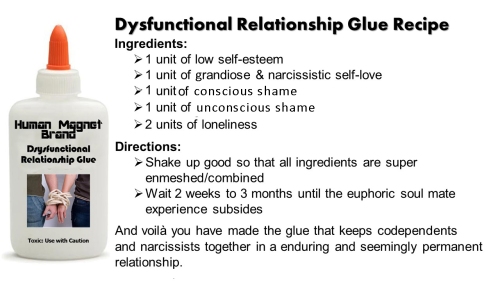
Co-dependency is a vicious cycle. Left unaddressed, it festers like a chronic wound. In relationships unwilling to heal, both people struggle with low self-worth. Boundaries are weak or nonexistent. Control and manipulation replace trust, and love becomes entangled with fear.

Have you ever realized how wrong you were in trying to do right?

dysfunctional-Glue

Here are some examples of what it means to be co-dependent:

• The need to be needed
• People pleasing
• Trying to control others (aggressively or passively)
• Focusing on helping others before working on your own issues
• Being consumed with other people’s problems
• Rescuing
• Self-doubt
• Unclear boundaries in friendships and relationships
• The tendency to date (or marry) alcoholics or addicts
• Perfectionism
• Workaholism (or always being busy)
• Exhaustion

Let’s break the cycle!

Your turn. What does co-dependency mean to you?

8 Comments

Filed under Behavior, Co-dependent, Relationships

Damaged Goods

Definition of damaged goods: inadequate or impaired. Products that are broken, cracked, or scratched. A person considered no longer desirable or valuable because of something that has happened—someone whose reputation is damaged.

Are you damaged goods? Do you feel unworthy?

You don’t have to remain that way, regardless of your past or your present.

Was that ever me?

You betcha!

Read on…

Hollow. Pure loneliness. Dark, like a bottomless pit. Ripping in my chest. Piercing my heart. Again, he stays out all night. Overcome by torment. Abandonment accompanies me. Consumed with depression, isolation wraps itself around me. My mind races with wild imaginations of where he has gone, what he is doing, and with whom.

Instead of going to bed to sleep, I am wearing a hole in the couch. Every time a car approaches, I spring like a jack-in-the-box, peeking out the window, hoping he has returned. With every disappointment, my stomach turns into knots. My own sobs mock me until I cry myself to semi-consciousness. Hideous lies will follow after he returns and add to my anguish and emotional decline. 

Broken. Flawed. Undone.

That was me back then, living with a cheating husband. His words, like rubbing alcohol poured over fresh wounds, stung!

There were no quick fixes. No bandages for emotional wounds. I sank deeper and deeper into a dark abyss, convinced I was beyond repair. For years, that was my reality.

But I know now, it didn’t have to be.

So what was the problem?

I was overwhelmed by abuse—physical, verbal, and emotional. My self-esteem was nonexistent. My sense of worth? Gone.

I believed the lies about who I was and what I deserved. I convinced myself this was just my life, my portion, my fate. I had seen the cycle before in my own family, yet somehow I couldn’t recognize it in myself.

“I made him mad again… maybe I deserved it.”

That’s what I told myself.

That’s what co-dependency sounds like.


How do you see yourself?

Have you been lied to? Torn down? Made to feel small and insignificant?
Do you feel like you’re drowning, gasping for air but never quite reaching the surface?

Maybe you’ve been trying so hard to please someone else that you’ve lost yourself in the process, compromising your values, your peace, your health, your identity.

Enough.

Do not allow someone else’s brokenness to rob you of your joy or harden your heart.

You are worthy.
You are valuable.
You matter.

There is nothing wrong with being fragile, but be like fine china: delicate, yet precious and worth protecting.

You are not damaged goods.
You are not disposable.
You are not a forgotten memory.

Do not become someone’s victim because you believed their lies.

I am living proof: God does not discard what He intends to restore.


Get up.

Rediscover yourself.

Feel your wrist, do you feel that? A pulse?

Then you still have purpose.

Allow God’s hand to lift you, to place you in higher places. He will wipe your tears and gently restore what was broken inside you.

If He brought me out of the pit, He can bring you out too.

But it takes a decision—a made-up mind—to believe that today can be the beginning of something new.


What’s in your hands?
What’s in your heart?

A dream?
A gift?
A child?

You have something worth fighting for.

Choose your battles wisely, but don’t give up the fight for yourself.

If you don’t know my pain, you may never understand my praise.

But my praise? It was born from surviving what tried to destroy me.


https://gofund.me/3f5e598b

9 Comments

Filed under psychology

UnMasked

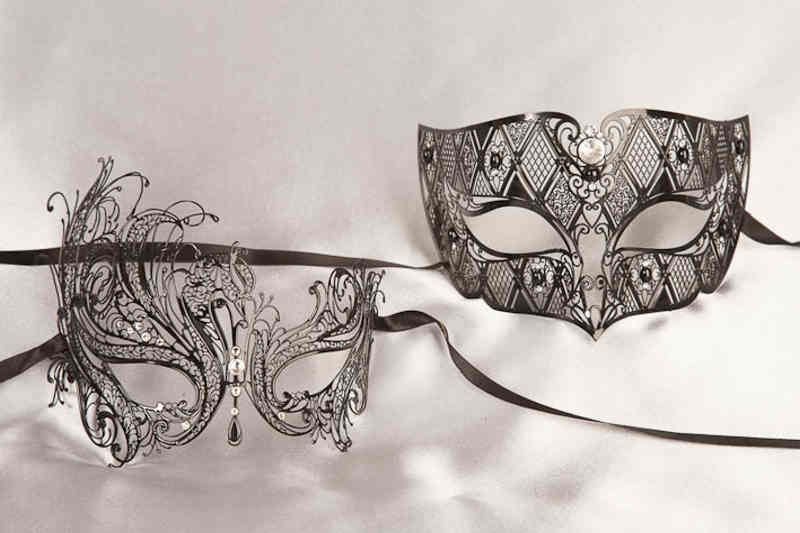
Photo Credit: justposhmasks.com

All through my life, I’ve dealt with feelings of low self-esteem and self-worth. I felt undone, incomplete, or insignificant. Along the way, I realized this stemmed from my childhood. I did not ask for it. I certainly did not want it. But with an undeniably painful past and a seemingly questionable future, I muddled through life. I thought a man could save me, but he only tried to create me in his own image! I became his shadow, even worshiped the ground he walked on, subservient to his every whim. I was truly lost, with no identity, no voice, no me. Yet I held on, not wanting to lose him. This, by the way, is a perfect example of insecurity: the more easily threatened we are, the more insecure we are.

Beth Moore says, “Insecurity lives in constant terror of loss.” As I’ve mentioned before, I’ve been reading Beth Moore’s So Long, Insecurity with the subtitle You’ve Been a Bad Friend to Us. How I wish she had written this book 40 years ago! She says, “Insecurity is not only a woman’s battle.” She identifies insecurity as a “profound sense of self-doubt – a deep feeling of uncertainty about our basic worth and our place in the world. The insecure man or woman lives in constant fear of rejection and deep uncertainty about whether his or her own feelings and desires are legitimate.”

I thought about myself as a Christian, why, from time to time, do I still struggle with insecurities? Why does rejection crush me so? Why do I second-guess everything? Beth reveals an interesting point about herself in her book: “I not only lack security, I also lack faith. I don’t just doubt myself, I also doubt God about myself.

Now I don’t know about you, but that struck a chord in me!

She goes on to say how some of us never seek healing from God for our insecurities because we feel like we don’t fit the profile. But insecurity’s best cover is perfectionism. Now there’s a mask for you!

A person who has no self-worth or a low self-esteem

tends to hide behind a mask.

Note: Here’s a thought-provoking poem I came across: Don’t Be Fooled By Me

What masks are you prone to wear? Looking back, I recall hiding the pain behind my smile…

Don’t try to be somebody you’re not. No one is perfect. It’s okay to let your guard down. We will face difficult and troubling times. Just remember, God loves us just the way we are; He loves us too much to leave us that way.

Sign2

6 Comments

Filed under Beth Moore, insecurities, Masks

UnMask

  purple_masquerade_masks_for_kids_BAMPIC02G

All throughout my life, I’ve dealt with feelings of low self-esteem and self-worth. I felt undone, incomplete, or insignificant. Along the way, I realized this stemmed from my childhood. I did not ask for it. I certainly did not want it. But with an undeniably painful past and a seemingly questionable future, I muddled through life. I thought a man could save me, but he only tried to make me into his own image! I became his shadow, worshiped the ground he walked on, and was subservient to his every whim. I was truly lost, with no identity, no voice, no me. Yet I held on, not wanting to lose him then. By the way, that’s a perfect example of insecurity: the more easily threatened we are, the more insecure we are.

Beth Moore says, “Insecurity lives in constant terror of loss.” As I’ve mentioned before, I’ve been reading Beth Moore’s So Long, Insecurity with the subtitle You’ve Been a Bad Friend to Us. Wish she had written this book 40 years ago! She says that insecurity is not only a woman’s battle. She identifies insecurity as a “profound sense of self-doubt – a deep feeling of uncertainty about our basic worth and our place in the world. The insecure man or woman lives in constant fear of rejection and deep uncertainty about whether his or her own feelings and desires are legitimate.”

I thought about myself as a Christian. Why, from time to time, do I still struggle with insecurities? Why does rejection crush me so? Why do I second-guess everything? Beth reveals an interesting point about herself in her book: “I not only lack security, but I also lack faith. I don’t just doubt myself, I also doubt God about myself.

Now I don’t know about you, but that struck a chord in me!

She goes on to say how some of us never seek healing from God for our insecurities because we feel like we don’t fit the profile. But insecurity’s best cover is perfectionism. Now there’s a mask for you!

What masks are you prone to wear? Looking back, I recall hiding the pain behind my smile.

A woman who has no self-worth or low self-esteem tends to hide behind a mask. 

 Note: Here’s a poem I came across: Don’t Be Fooled By Me


6 Comments

July 6, 2014 · 6:30 PM

Did You Say, “Insecurities”?

So, I’m reading Beth Moore’s So Long, Insecurity. I’m not even past chapter four yet, and find myself re-reading and digesting the words on the pages. She states in her book that we all have insecurities, and most have enough insecurity to hinder us. As I reflect on whether I’ve ever felt insecure, I’m sad to admit that I’m well-acquainted with insecurity.

Beth Moore ties insecurity to a profound sense of self-doubt. Ouch! However, I think I already knew this. How many times have I determined to do something, only to change my mind? How often have I started a task only to lack the courage to move forward? My palms get clammy. My confidence deflates. My resolve wavers. My bravado crumbles. I bet I’m not the only one who struggles with this!

I’m a common woman sharing common problems seeking common solutions on a journey with an uncommon Savior.

The word rejection is also mentioned in the book, and that brings me to ask: Well, who in the world likes to be rejected? To the point where I sometimes think, if you reject me, I’ll go out of my way to prove you wrong—sometimes—despite my own hurt, creating my own misery. I can honestly say, I know my own flaws, or at least I’d like to think so. But the astonishing thing for me is reading what an insecure woman looks like:

She may easily cry, avoid the spotlight, and have a strong desire to make amends, whether it’s her fault or not. If someone gets angry at her, she has a difficult time not thinking or dwelling on it. The insecure woman sometimes feels anxious for no apparent reason; her feelings get hurt when she learns someone doesn’t like her, and she may even fear that her husband might leave her for another.

Talk about a lack of self-worth!

Well, I asked my husband what insecurities he saw in me. (Because after all, I know I have some.) And this is what he answered: The big one is when you feel like you’re not in control. Not having a say in something, and having a tendency to micro-manage. He said this goes back to my early years when others told me what to do and when to do it. What an eye-opener! While this was true during my childhood, it was also true in my first marriage.

Before I became a Christian, I struggled with insecurities, and now as a Christian, I still struggle at times. I learned a long time ago that I’m not perfect, but I’m forgiven. I’ve opened myself up to sharing some of these truths with you because I know they are life’s lessons. I’m still learning, and if there’s a pulse and breath in your being, then you are still learning, too. No one on this earth is perfect or has arrived. I’ve determined to work on my insecurities.

How about you?

© M.A. Pérez 2014, All Rights Reserved

15 Comments

Filed under Beth Moore, insecurities