Tag Archives: puerto rican

The Smells and Sounds of Childhood

I was always hungry as a little girl.

Not the kind of hungry a snack fixes. The kind that settles into your bones when you’re small and poor and there’s not much in the refrigerator.

So when I think back to the smells of my childhood, the first one that finds me isn’t café con leche or a pot of arroz con pollo bubbling on a Sunday afternoon. It’s a hot dog. Frying. In the middle of the night.

I couldn’t have been more than five or six years old. I was home alone and had fallen asleep, waiting. I heard the door open in the wee hours of the morning. Mama and my stepfather were home from a night out. Still tipsy. Loud in the way grown-ups get home late at night when they think the little ones are asleep.

Half asleep, I called out the only thing on my mind.

Mama. I’m hungry.

She grumbled, surprised that I was still awake. But she went straight to that hotplate and started frying me a hot dog. When my stepfather asked her to make him one too, she put him right in his place.

Hold your horses.

Me first.

In her own imperfect way, she chose me that night. Eyes barely open, I ate that hot dog in bed like it was a feast.

Because it was.


But the smells and sounds that shaped me most came later.

I spent three precious years with my grandparents in their small two-bedroom apartment in sunny Miami.

At the time, I thought it was just life. I didn’t know yet that those three years would become the safest years of my childhood.

I knew I was loved there before I even opened my eyes in the morning. I could hear the soft clattering of dishes in the kitchen, my grandmother up and moving, already starting the day before it had even begun. Near the curtain window, doves cooed somewhere nearby. And always, always, there was the aroma of Spanish coffee.

On the radio, Paul Harvey’s warm, unhurried voice filled the room. And now… the rest of the story. Even the radio felt steady in that house.


My grandfather was a man of few words. Strong, quiet, and deeply loving toward my grandma. He didn’t cook; that was entirely Grandma’s domain, but he showed up in every other way a man can.

Every morning, he walked me to school. Every afternoon, he walked me home. No big speeches. No lessons announced. He allowed me to speak, asking how my day went. Just his presence, steady as a heartbeat, beside me on the sidewalk while I chattered along.

He read the Bible every day and the newspaper front to back. And every Sunday, after church, we took the city bus to a cafeteria for lunch and then to the library in downtown Miami, where we’d spend hours wandering among the books. Looking back, I think that was his way of showing me the world.


And Grandma.

She cooked three warm meals a day, every single day. I didn’t know until I was older that she wasn’t the best cook. It didn’t matter. To a little girl who had gone to bed hungry more times than she could count, three warm meals a day felt like abundance. Like being rich.

If you didn’t finish your plate, there was no dessert. Simple as that.

But what I remember most about Grandma wasn’t the food. It was the sound of her.

She hummed gospel songs through everything, while ironing on the aluminum table on laundry day, at the sewing machine, at her big black typewriter, or crocheting in her rocker.

Worship wasn’t just for Sundays with Grandma.

Grandma hummed while doing everything, always moving, making something, doing for others, always grateful.


And on Sundays, we dressed in our best.

I didn’t have many dresses, but what I had was always clean and pressed. Grandma made sure of that. We walked into church looking like we belonged there, because she believed we did.

The church was our source of strength, comforting and encouraging us in a way that held us together through the week. I would watch my grandmother in the pew, her eyes glistening with tears she didn’t bother to wipe away.

She wasn’t performing. She was just… grateful. Deeply, quietly, overflowingly grateful to God.

I didn’t fully understand it then. But I was watching faith with skin on it. And it was leaving its mark on me.


I was sent back to live with Mama when I was twelve. That chapter is its own story, and not an easy one.

But I still carry the memories with me.

The soft sheets between my toes. The cooing of the doves outside my window. The aroma of coffee. Paul Harvey’s mellow voice. My grandfather’s footsteps beside mine. And my grandmother’s humming over the daily chores of our home.

Those smells and sounds didn’t just shape my childhood.

They shaped my faith.

.
9 Comments

Filed under Family memories, memories

My Heartbeat – Part I

This past Father’s Day week was filled with anticipation of renewal and adventure. With the ongoing planning came lots of prayers and nerves about the unknown.  

Let me explain …

As more COVID mandates about wearing masks, social distancing, etc., were lifted, people began to venture out again and travel. It was decided that my husband and I would fly to Florida for a one-week vacation. Finally, I was going to be with my dad and celebrate Father’s Day with him. I connected with my sister, who made all the arrangements for us to meet.

They said Daddy was in the beginning stages of dementia. My concerns were many … the main one being: Would Daddy remember me? Oh, how I prayed that he would! 

In Kissimmee, we met at an outdoor market. When I walked up to Daddy, the familiar twinkle in his eyes met me. Those eyes still sparkled! We hugged and kissed. Yes, he remembered me! Later, when we embraced longer, I took his beautiful face all in, and my tears started falling. He hugged me, looked me in the eye, and asked, “¿Por qué lloras?” “Why are you crying?”

I cried because I love him. I cried because God is good and granted me another tender moment with my dad, forever imprinted in my heart. I cried because I missed my daddy. I cried because he is getting older and frail, and I didn’t ever want him to forget me. I cried because we live in another state and I couldn’t always be by his side. I cried because I was grateful. I got to know him after he and my mom separated when I was 3. They divorced by the time I was 6. I cried because I knew he wouldn’t always be around for us to visit. I cried because of the dreaded, impending reality of a child one day having to say goodbye to their parent. Forever.

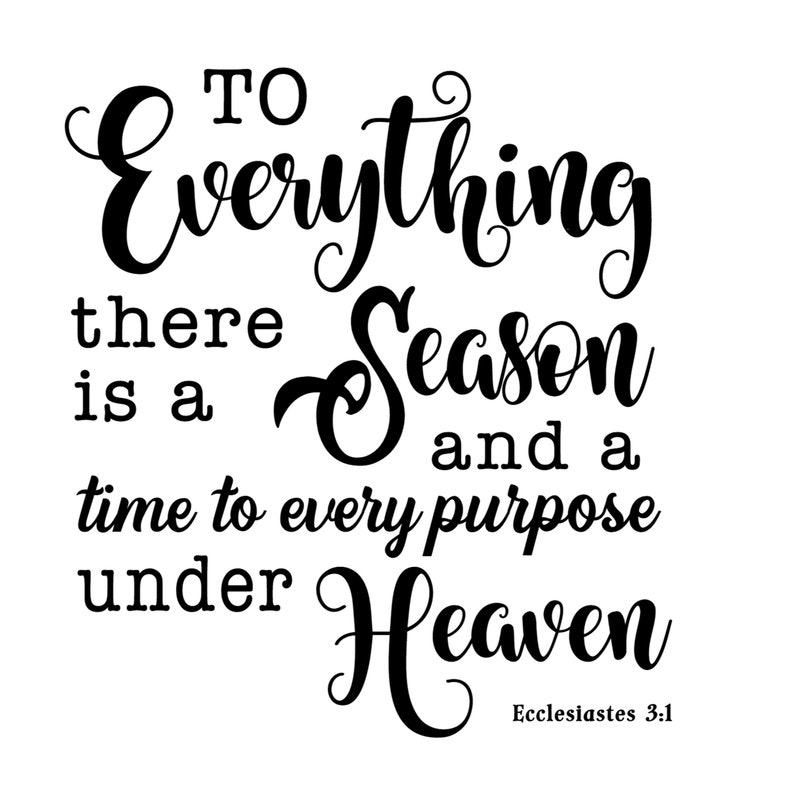
To Everything There is a Season Ecclesiastes Saying Cricut image 0

Daddy, if you could see yourself through my eyes, you would know how special you are to me. And I am grateful for our time together.

12 Comments

Filed under Father's Day

Through My Lens

Picture1As I reflect on my vacation this year, I focus on the glitter of the glue in my family. The stuff that makes them glow through difficult circumstances, yet not fall apart. It is the Strength in their sails,
the Laughter through the tears, and the Lightanchornew in the darkness. The waves may beat on the boat called Life, but their faith in God is the anchor that
keeps them from drifting afar.

Through my lens, I observed how one can remain playful and young at heart, laugh at themselves silly, and enjoy the simple things in life.
14923_10204703715180608_5675463751065842269_n 10600375_10204703715860625_6913583592732597383_nThrough my lens, I saw how one so small can love so big; remain warm and engaging, lovable without reservations.10556236_10204728125950862_5977327558787419493_n

Through my lens, I noticed that when the going gets tough, the tough get going! They refuse to sit down, roll over, or give up on life. They know tomorrow is on the horizon, another day for new beginnings.10374430_10204728701285245_6597456912167368273_n

10559740_10204703690339987_8489302758064957017_nThrough my lens, I observed that age is just a number; it doesn’t mean one ceases to exist, learn, or do.10606108_10204704812728046_6739570265579190164_n

10394787_10204734966921882_1887371197761074745_n

Through my lens, I got to witness such amazing selfless love. The sacrifices and serving of others: putting themselves last, while thinking of others first.

10436271_10204678200342753_1091761609782845600_nI heard the cry of their heartbeat. Thump. Thump. Compassion. Thump. Thump. Forgiveness. Thump. Thump. Passion. Thump. Thump. Sincerity. Thump. Thump. Tenacity. Thump. Thump. Love. Thump. Thump. Puerto Rican heritage.

logo2

What did I learn in my ten days of vacation? If I can be just one example of what it means to love and to be loved, I’ll overcome what life may throw at me. I’ll face each trial with the certainty that God is still God of the ages and He continues to work on our behalf. No matter what.

Plans don’t always work the way we think they will. Situations may take a turn that differs from what we planned. We aren’t always prepared for the what-ifs. We aren’t perfect. But we are family. And the greatest gift of all is family.

1939720_10204703715020604_4119621491714830039_n

© M.A. Pérez 2014, All Rights Reserved

5 Comments

Filed under familia, family, Vacation

Love Spoken Here

Visiting Daddy in the early seventies, on weekends and during summertime, I remember how he loved to watch Lucha Libre. His favorite wrestler then was Rocky Johnson (the father of Dwayne “The Rock” Johnson). Also a die-hard Yankee fan, Daddy loved his baseball team.

“¿Vite? You see dat?” Daddy shouted and pointed to the TV, asking no one in particular. “Man, dat Mickey Mantle can hit dat ball sooo hard . . . !”

Daddy and my stepmother, Gloria, were raising my brother Ruben. Yes, I was a bit jealous. Although Daddy spoke both languages to me, I never became as fluent in Spanish as my brother had. I understood the language more than I could speak it.

Daddy enjoyed many hobbies. He knew his fruits and vegetables, having worked on his father’s land in his prime. He loved gardening and showing off his avocado and gandules (pigeon peas) plants that he had planted himself, just as much as he loved chewing and sucking the juice from raw sugar canes.

Although Gloria hardly spoke English, we managed to communicate well enough. She treated me like her own child, showering me with loud smooches and tight squeezes. When she talked to me in Spanish, I responded to her in English and my broken Spanish. In the mornings, she’d asked if I wanted “Con Fley” because she knew I liked cereal, and then asked if I wanted her to fix me a huevo frito, too. She was such a great cook; we all loved her comida. Seeing her work in the kitchen, preparing mouth-watering delicacies, was a common sight. Meals were her priority. She often cooked wearing rollers under a hairnet, sometimes in a floral house dress, and always chanclas on her feet.

Back then, feathered friends scurried about in the backyard, and a number of them were nesting on eggs. I liked feeding the ducks and watching them swim in the pond. Not so much with the chickens, though, I knew they were for consumption. But I couldn’t keep from watching in agony whenever Gloria ran after one, caught it, and then wrung the poor creature’s neck. It gave me the creeps. Then I’d stay clear of the messy job of plucking feathers. Gloria also chose whatever Daddy planted in the yard to complement any of her flavorful traditional entrées, whether her arroz con pollo (rice and chicken), arroz con gandules (rice and pigeon peas), or pernil (roasted pork). Each dish was first sautéed in sofrito (a mixture of bell peppers, garlic, onions, and capers blended into a paste) in a deep caldero. The aroma alone made your mouth water. Gloria served side dishes of fried sweet plantains, large Florida avocados, simmering red beans with new potatoes, and always with a big pot of yellow rice.

One Sunday, after a tasty meal of chicken stew, we drank café con leche, a strong espresso made with hot milk and sugar.

“Mary, did you like Mami’s pollo guisado?” Daddy asked, sipping from his cup.

“¡Si!” I answered, practicing my Spanish. “Muy bueno.”

“Oh, yeah? You wanna know somteen’?” Daddy’s eyes twinkled.

“¿Que?” I asked, blowing on my cafesito, too hot to drink.

“Dat’s no chicken you ate . . . dat was un pato.”

A duck? I stared at Daddy, and then at Gloria, then at the leftovers in the pot. I didn’t feel so good. My stomach felt queasy. I raced to the bathroom without a moment to spare when my entire lunch came up.

Gloria helped wipe my face in the bathroom and pleaded, “Ay, Marí. Perdóname.

I knew she felt terrible about what happened. But when I looked out the window, I couldn’t quit thinking about how I fed those cute, adorable ducks. And I had eaten one!

With no hard feelings toward anyone about the duck incident, I enjoyed being at Daddy’s house and forgetting my troubles back home with Mama. I noticed the way Gloria fussed and cleaned house; the same way she enjoyed cooking: fast, thoroughly, and con mucho gusto. She didn’t like dirt. She had every chair in the house, even the couch, covered with plastic! When it was time to clean the bathroom, she poured a bucket filled with soapy water on the floor, walls, and tub, scrubbing, mopping, and drying until everything was squeaky clean. She never relaxed until the evening when one of her novellas came on TV. Daddy and Gloria were affectionate and called each other pet names. Because Daddy’s skin was brown, Gloria called him, “Negro.” While many knew my stepmother as “Pita,” Daddy called her his “Mamita.”

Seeing their love in action made me smile. Although Gloria didn’t speak English, her hugs and warmth said more than the words of my own mother.

And she could cook.

12462_1273850935179_2169666_n(1)

Gloria making her famous pasteles.

(Excerpt from Running in Heels – A Memoir of Grit and Grace ) © M.A. Perez 2013, All Rights Reserved. Note: Featured in La Respuesta online Magazine, Dec. 2013 Culture section

13 Comments

November 14, 2013 · 9:15 PM